The Other Cast: Meet the Parents Behind the Curtain
It started with Shrek and a rather full costume cupboard
When Nina first volunteered, the school community was still emerging from the isolation of the pandemic. From costume rescues and backstage logistics to friendships that last beyond the final curtain, parent volunteer Nina Seth reveals why school theatre is as much a community production as a student performance.
When the curtain rises on Romeo & Juliet at the International School of Hamburg on 17 November, the audience will see young actors bringing Shakespeare's tragedy to life in post-war Berlin. What they won't see is the dedicated team of parents who have spent months helping to make it possible.
Among them is Nina Seth, a member of ISH's Parent Engagement Team and a familiar face backstage. Her involvement began with Shrek, the school's first major production after COVID, and has continued through A Midsummer Night's Dream, ALICE and now Romeo & Juliet.
What started as an offer to help has become something, well, rather more significant.
"All the kids were sitting isolated with their headsets on their devices," she recalls. Rebuilding the sense of togetherness essential to theatre was as important as putting on the show itself.
There were few parent volunteers, plenty of challenges and even an outbreak of illness that forced the production dates to change. Yet Nina remembers the excitement when everything finally came together.
"It doesn't matter whether you are the leading actor or the one behind the scenes. Everyone is excited."
She also noticed something else: several costume rooms overflowing with clothes, boxes and forgotten theatrical treasures.
Rather than walk past, she recruited two fellow parents to help reorganise them. What began as a practical tidy-up became the foundation of a parent team that has supported the school's subsequent productions.
Today, Nina helps coordinate costumes, backstage arrangements, volunteers and the all-important food for long Saturday rehearsals. She has become one of the people who knows where things are, what still needs doing and who might be able to help.
Meet the other cast
Over successive productions, a close-knit team of parents has emerged, each bringing different talents and strengths to the table.
There is Justine, the creative mastermind who helps shape the overall visual identity of the production, from the initial ideas to the finishing touches.
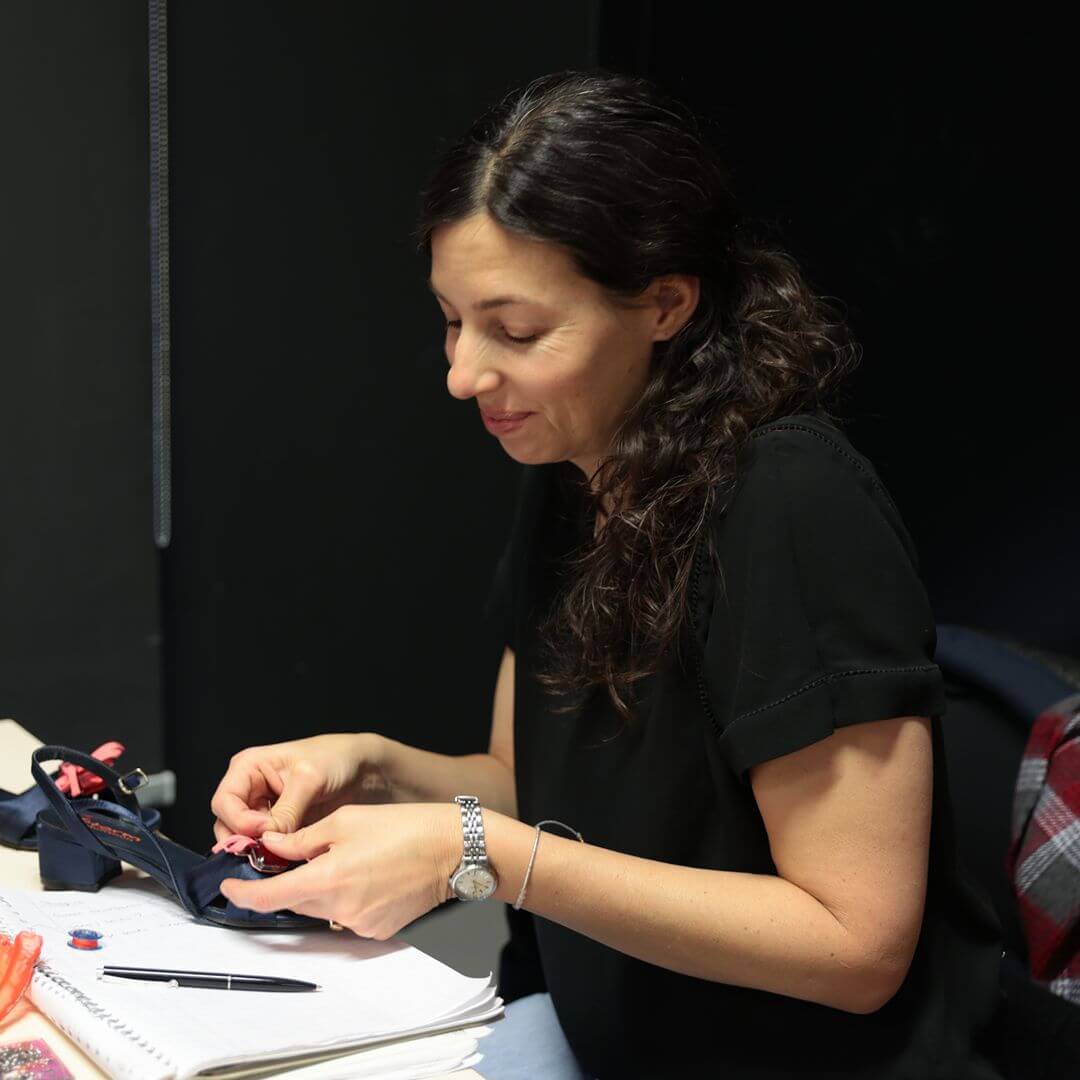
Andrea, Veronica and Agnese are the skilled makers who turn those ideas into reality, crafting, stitching, creating and keeping the many practical tasks on track.
And Anat, Ulrike and Nina form the make-it-happen crew, ready to step in wherever an extra pair of hands, a solution to an unexpected problem or some practical coordination is needed.
Together, they make an impressive team—one built not around formal job descriptions but around people's willingness to contribute what they can.
For Nina, the parents' contribution is also about supporting the teachers and directors, who already have their hands full with the artistic side of the production.
"It's a little bit that we take off their shoulders that they don't have to worry about," she explains.
Even something as simple as organising lunch during a Saturday rehearsal can make a difference. These breaks offer students from different grades an opportunity to get to know one another and develop the trust they will need on stage.
"It's like a team in sports," Nina says. "You have to somehow have that team spirit and understand that you will be playing together."
Everyone has something to contribute
For Romeo & Juliet, the parent team has been sourcing costumes and accessories to recreate the atmosphere of post-war Berlin.
The challenge is to capture a period of contrasts: the glamour associated with mid-century fashion and the reality of a city still recovering from destruction.
Often, the most useful contributions come from unexpected places.
For a previous production, one parent brought in vintage suits belonging to her father. Agnese, meanwhile, became involved almost by chance when Nina invited her to help one Saturday. She went on to create crowns for A Midsummer Night's Dream and has since become the team's unofficial hatmaker.
For Romeo & Juliet, her network has already produced an original 1950s suitcase containing period accessories.
These small discoveries reflect a philosophy that guides the team's work.
"Our guiding principles are creativity, resourcefulness, sustainability and making the most of what we already have," Nina explains.
Rather than purchasing everything new, the team reuses, borrows and gives objects a second life.
But Nina believes there is still enormous untapped potential within the wider ISH community.
"How can we actually get to the talents and treasures hiding within our community?"
Whether it is a practical skill, a little time, something to lend or donate, or simply a helpful connection, there are many ways families can contribute. A forgotten suit, a spare mirror, a talent for crafting or sewing, or a few hours of someone's time could make all the difference.
And no previous theatre experience is required.
Seeing your own child in a different light
One of the unexpected rewards of volunteering has been watching Nina's own children discover what they are capable of.
She remembers practising songs in the car with her son Chai during Shrek, encouraging him to sing more confidently rather than simply mouth the words.
Later, watching him take on the role of Oberon in A Midsummer Night's Dream, she saw a transformation.
"To see him step into the role of Oberon and fill a stage suddenly, and display a real talent for acting—that surprised me."
For Nina, these are among the most valuable experiences a school can offer families.
Parents see their children outside the familiar routines of home and the classroom. They discover confidence, creativity and independence that might otherwise remain hidden.
And students discover something about themselves too.
Theatre requires discipline, reliability, teamwork and the willingness to attempt things that initially feel uncomfortable. Nina recalls how her younger son was less than enthusiastic about dancing in a previous production, yet eventually mastered it and enjoyed the performance.
There is also something special about creating together.
"The fact that you have a creative experience as a group and not just as an individual," she says, comparing theatre to playing in an orchestra or being part of a sports team.
Finding your people
For Nina, however, the rewards extend beyond seeing her children perform. Volunteering has brought together parents with different backgrounds, skills and experiences, creating friendships that continue from one production to the next. She describes the feeling simply as "a sense of belonging".
The team has developed its own rhythm. Parents know one another's strengths, enjoy working together and return because they genuinely value being part of the team.
Some even remain involved after moving away from Hamburg.
"It comes as a fun thing," Nina says.
In an international school community, where families arrive from different parts of the world and may stay for only a few years, these shared projects provide opportunities to build connections that go well beyond the school gate.
Volunteering becomes a way to participate in school life, meet other parents and contribute to something that belongs to the whole community.
The moment that makes it worthwhile
After months of preparation, costume fittings, rehearsals and last-minute adjustments, what is Nina most looking forward to?
Not opening night. Not even the applause. It's the moment after the final performance.
"That moment backstage when everyone is just—that joy that everyone is feeling. It's a very unique moment. It's really, very special."
For the students, it is the culmination of months of hard work. For the parents, it is the satisfaction of knowing they helped make it happen.
And for Nina, it is why she keeps coming back.
Perhaps the most rewarding part of school theatre isn't simply watching a production come together. It's discovering what a community can create when everyone plays a part.