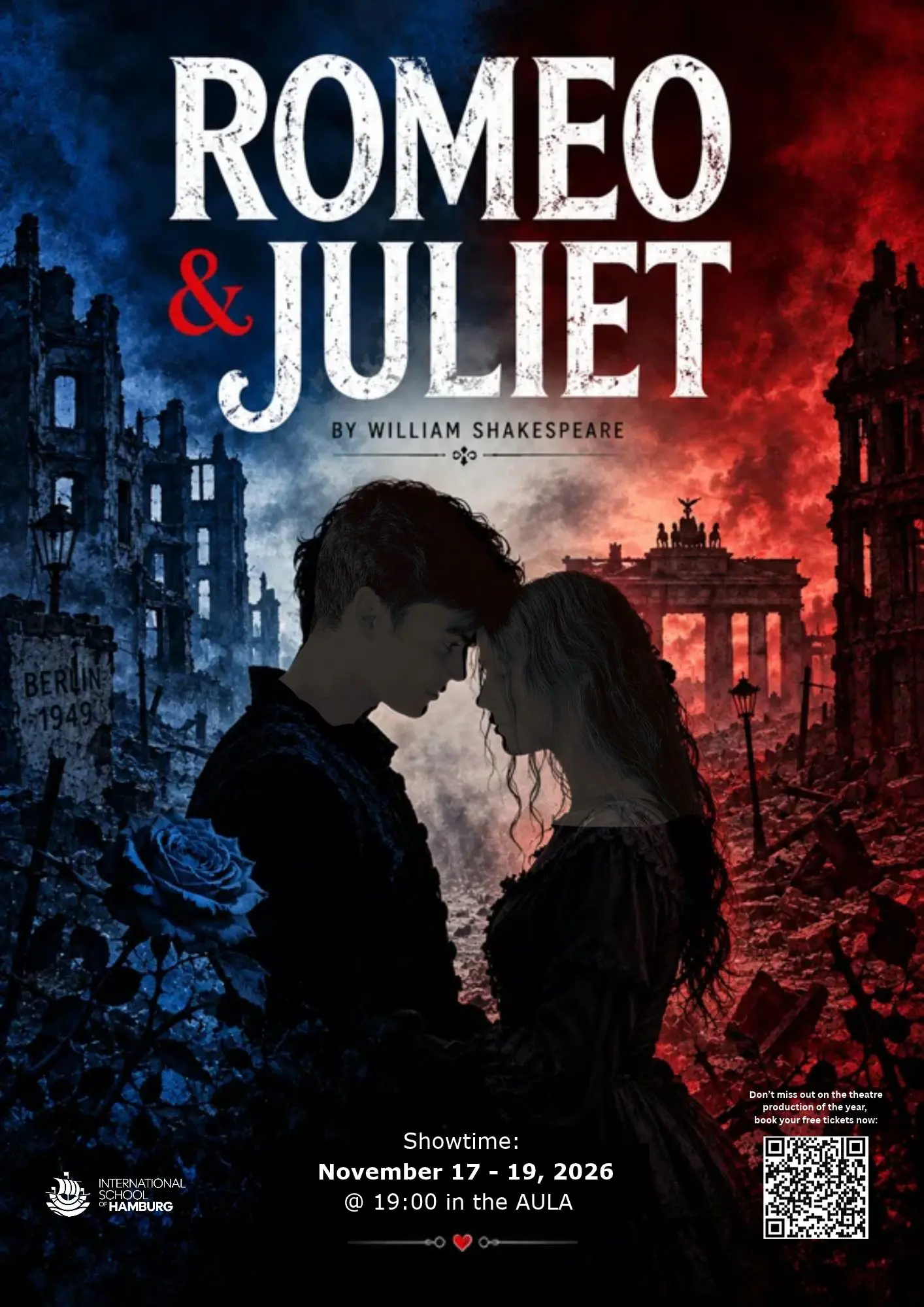
ROMEO & JULIET
Two households. One divided city. A love that defies both.
Berlin, 1949 | 17–19 November 2026 | 19:00 | ISH Aula
A student production by the International School of Hamburg, performed in English.
Free admission. Advance booking required.
What happens when love crosses a line that society has drawn?
Shakespeare’s most famous tragedy moves from Verona to post-war Berlin, where competing loyalties, new freedoms and a divided city shape the lives of two young people. Through theatre, dance and stage combat, ISH students explore identity, prejudice, independence and the consequences of conflicts inherited from adults.
Berlin, before the WallThe Berlin Wall would not be built until 1961, but the city's divisions were already deeply felt. In the 1950s, young people on either side of Berlin experienced contrasting political realities, cultural influences and expectations. Rock 'n' roll, new fashions and youthful independence challenged established authority. Against this backdrop, the rivalry between the Montagues and Capulets becomes a story about much more than two families. It raises questions about borders, ideology and the price paid when one generation's conflicts are passed on to the next. 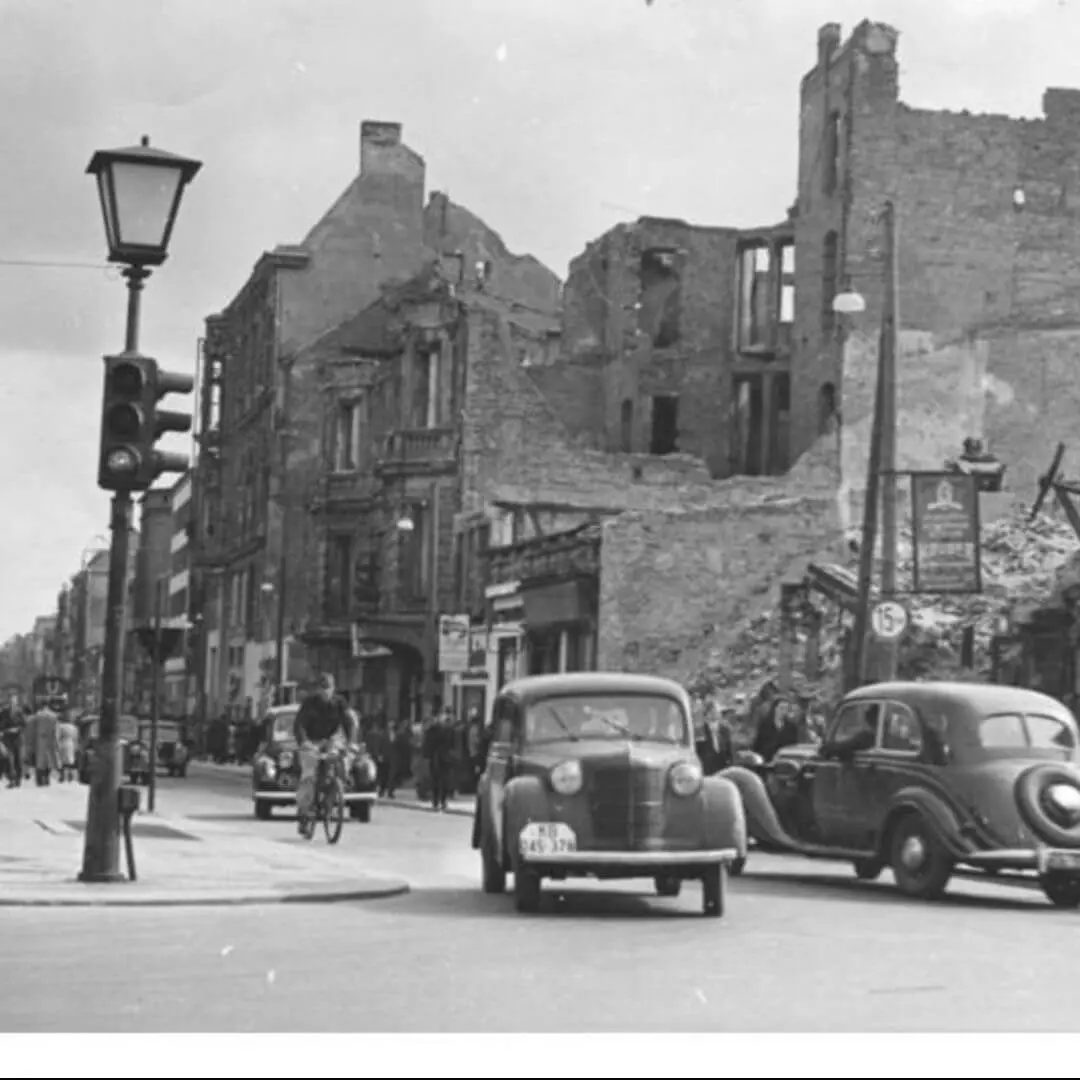 "Berlin, 1949. A city rebuilding after war, its future increasingly shaped by political division. " CC BY-SA 3.0 Germany. | A little closer to home: When youth rebellion had a soundtrackJust a short distance from the International School of Hamburg stands the Christianeum, a school with an extraordinary connection to Germany's history of youthful rebellion. During the Nazi era, the Christianeum became a centre of Hamburg's Swing-Jugend, a youth movement whose members embraced jazz, swing music and international culture in defiance of the conformity demanded by the regime. What began for many as an expression of personal freedom brought some into direct conflict with the authorities, leading to arrests and persecution. Our production of Romeo & Juliet takes place a decade later, in the divided Berlin of the 1950s. Yet the historical parallel is striking: young people finding their own voices in societies where political loyalties, cultural identities and personal freedoms were fiercely contested. From Shakespeare's Verona to Cold War Berlin, and from the Swing Youth of Hamburg to the students taking our stage today, one question continues to resonate: who gets to decide the future of the next generation? 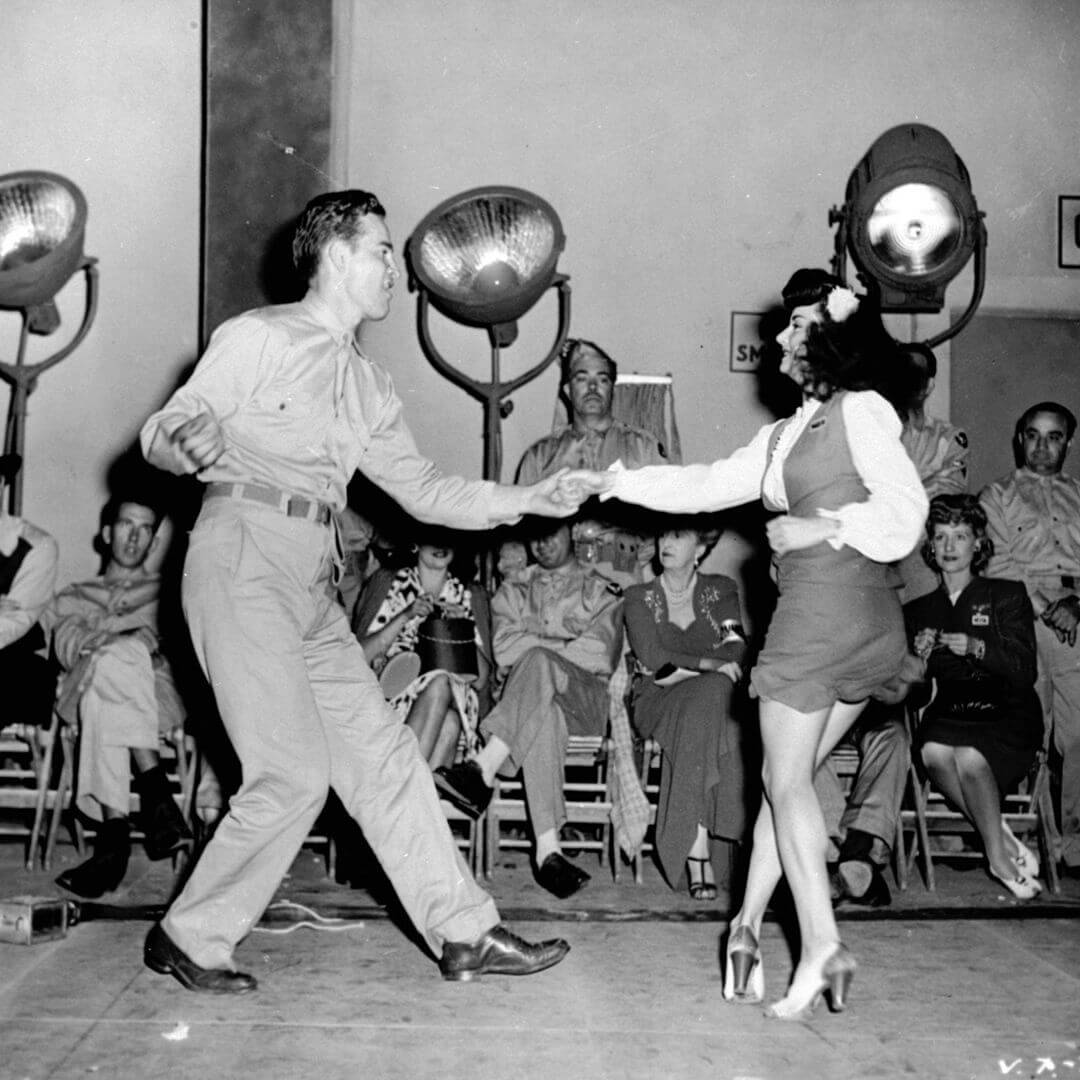 Swing dancing became a symbol of youthful freedom and international culture in the 1930s and 1940s. |
Meet the Talent Behind the Scene






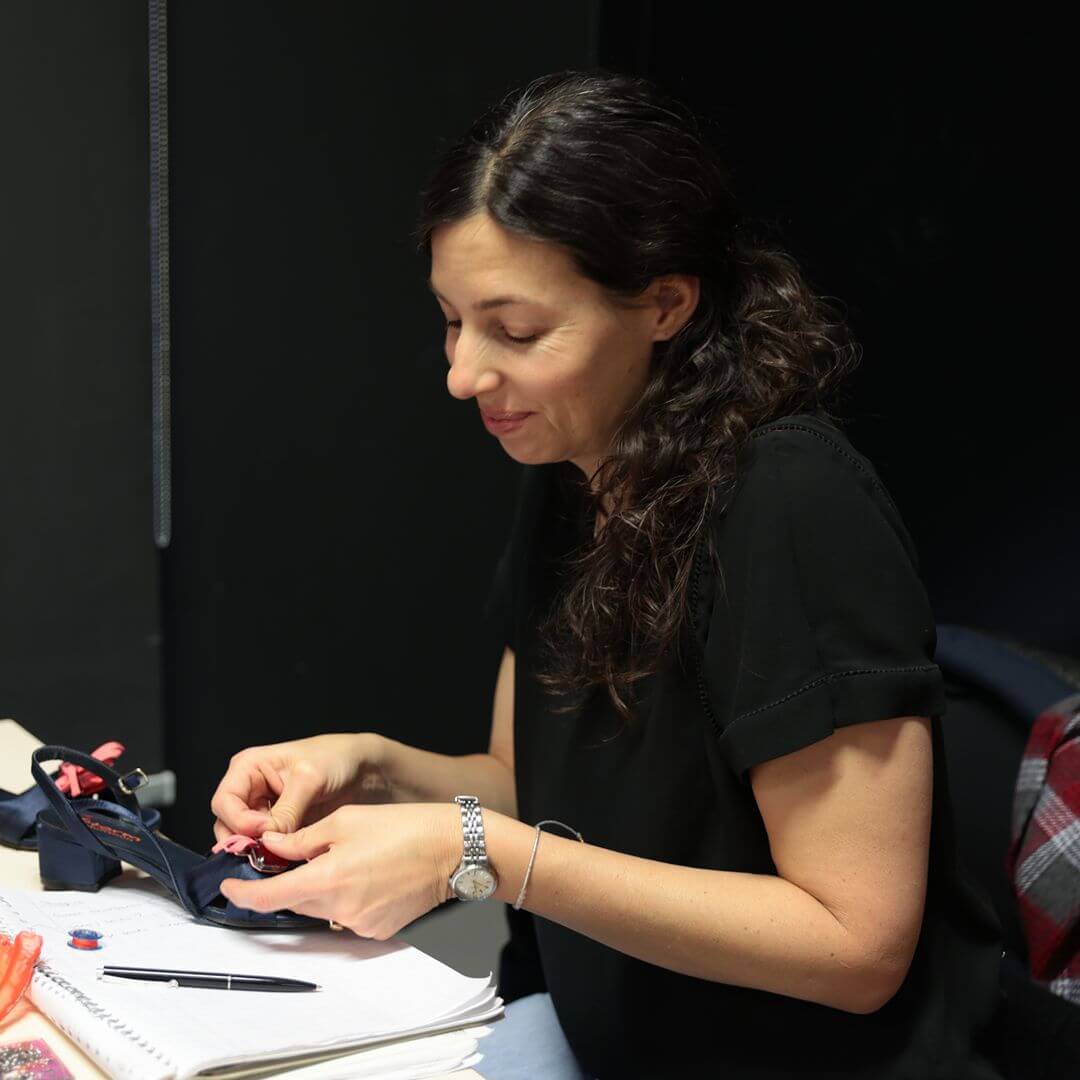
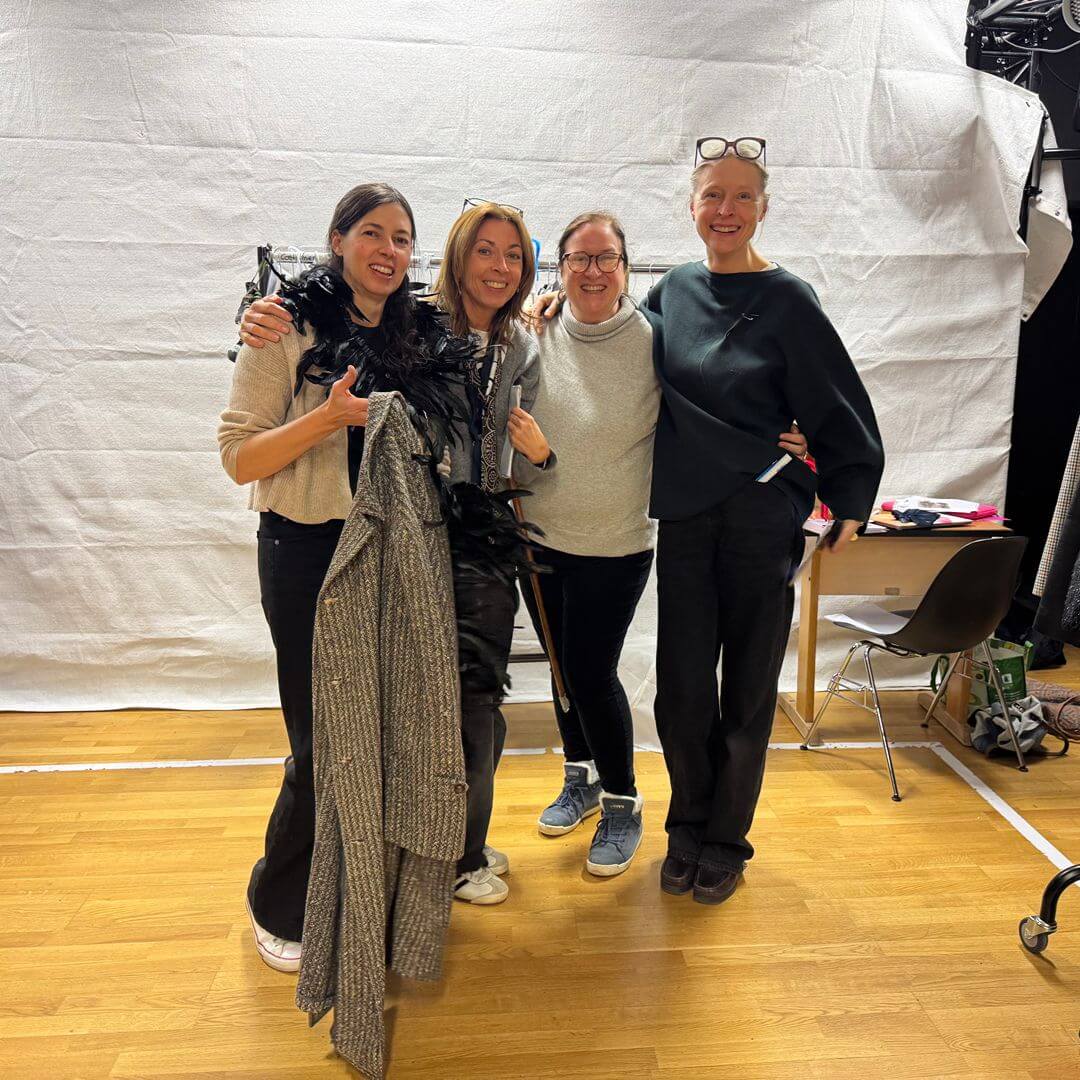
The Other Cast: Meet the Parents Behind the Curtain
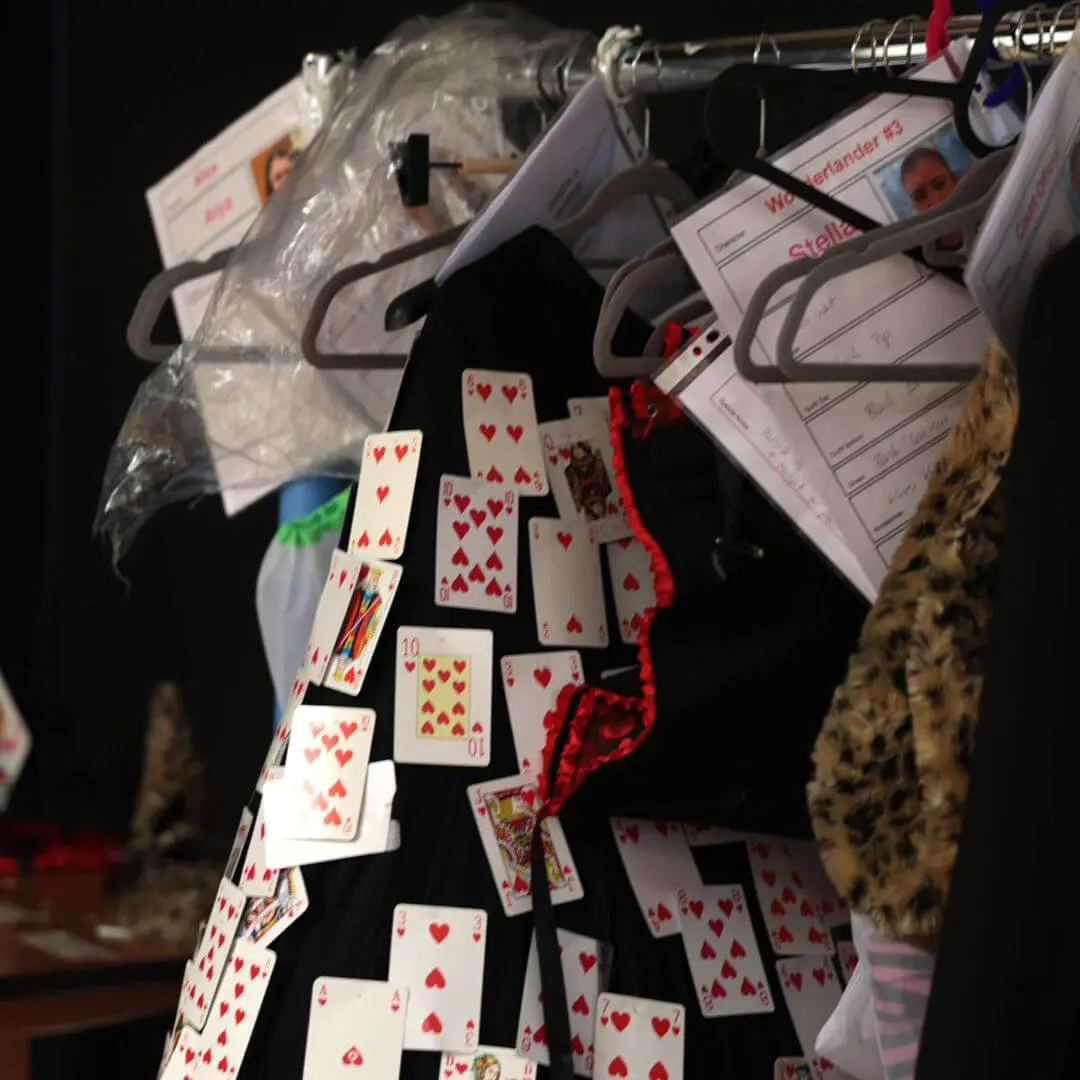
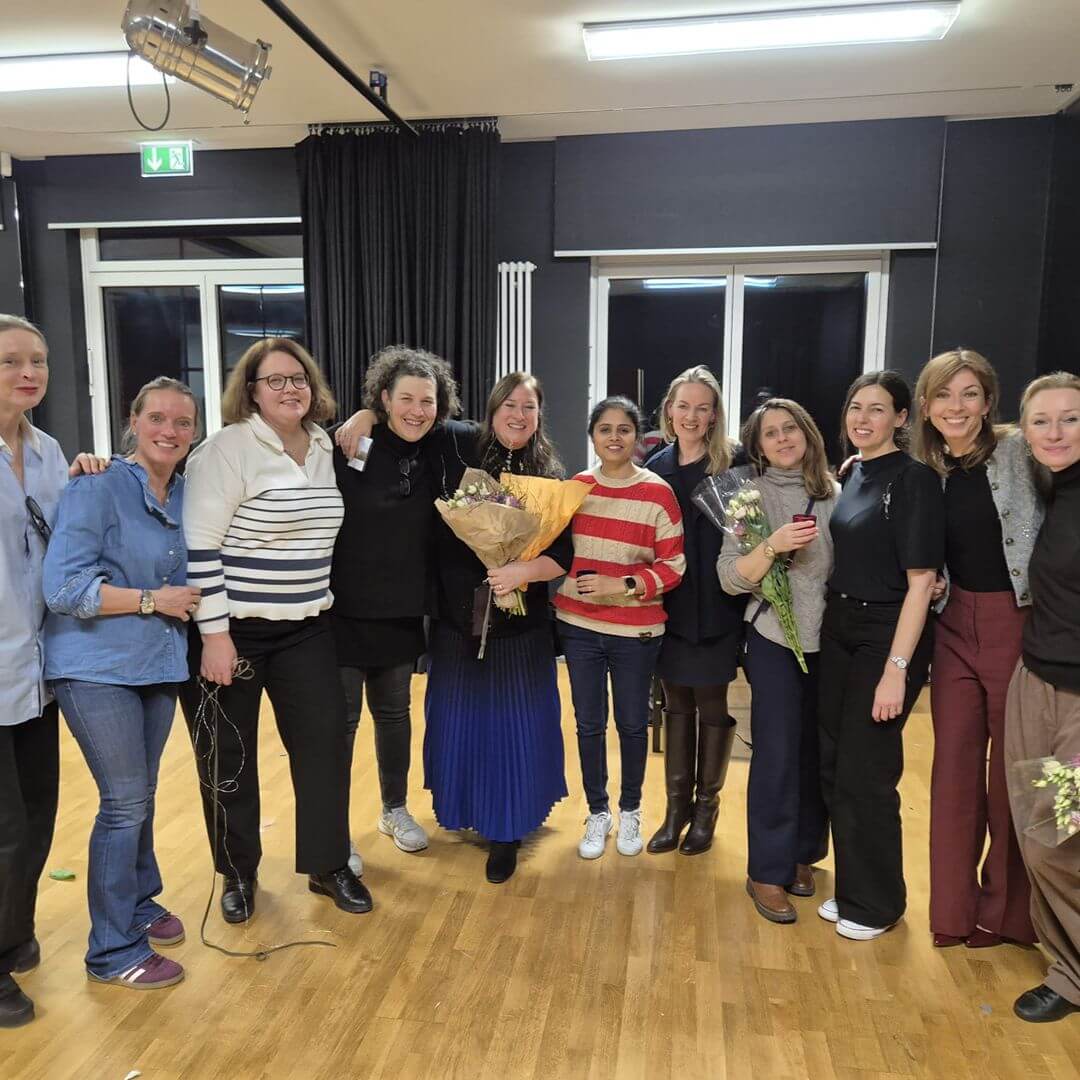 | From costume rescues and backstage logistics to friendships that last beyond the final curtain, parent volunteer Nina Seth reveals why school theatre is as much a community production as a student performance. What started as an offer to help has become something, well, rather more significant. |
Meet the ISH parents whose creativity, resourcefulness and teamwork help bring Romeo & Juliet to life—and discover why volunteering offers so much more than a view from backstage.